
Recently updated on March 5th, 2026 at 9:24 pm
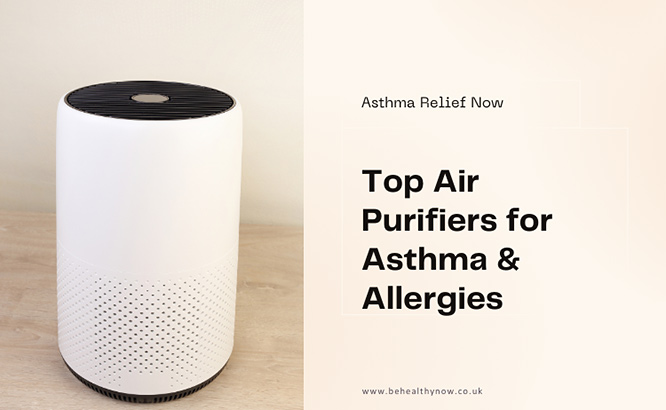
I’ve been toying with the idea of getting an air purifier for my home for quite some time. I have mild asthma (mostly an occasional cough), and I’ve had allergies for years too, so indoor air quality has always been on my mind.
After an allergy test, I found out I’m allergic to grass (yes, grass!). It wasn’t a huge surprise given how I feel during hay fever season, but it did push me to finally look into what the best air purifiers actually are for asthma and allergies.
And while researching, I didn’t just find a few good models – I also learned a lot about common asthma and allergy triggers at home, and why not every air purifier is a good idea (some can actually make symptoms worse).
In this post, I’ll share my top picks and the simple things that matter most when choosing an air purifier for allergies, hay fever, or asthma.
Disclaimer: This post contains affiliate links which means I may get a small commission if you purchase a product after clicking on a link. This does not cost you anything. As an Amazon Associate I earn from qualifying purchases.
Can Air Purifiers Really Help with Asthma?
First of all, let’s clarify something – yes, air purifiers can help with asthma and allergies, but they’re not a magic solution. The key is choosing the right one. Not all air purifiers are created equal, and some can even make symptoms worse (looking at you, ozone-emitting models).
The best air purifiers for asthma and allergies are those with a True HEPA filter, which captures tiny particles like dust, pollen, pet dander, and mould spores – common triggers for both asthma and allergy symptoms. Adding an activated carbon filter is also helpful because it can reduce odours and certain gases (like cooking smells or smoke).
On the flip side, air purifiers that emit ozone, use ionisers, or rely only on UV-C light are best avoided. These can irritate your lungs and may trigger coughing or breathing issues.
Also, keep in mind that an air purifier works best as part of a bigger approach. Regular cleaning, keeping humidity under control (to help with mould), and reducing strong scents at home can make a big difference too. So, while an air purifier can definitely help, think of it as one piece of the puzzle.
Best Air Purifiers for Allergies, Hay Fever & Asthma (My Top Picks)
Below are my top picks, chosen for strong filtration, solid reviews, and suitability for common asthma and allergy triggers.
Quick note: CADR stands for Clean Air Delivery Rate – basically, how quickly the purifier can clean the air in a room. Higher CADR = faster cleaning (as long as the purifier matches your room size).
Levoit Core 600S (US name: Core 600S-P)

Best for: larger rooms / open-plan spaces, especially if pollen, dust or pet dander trigger symptoms.
Air cleaning power: very high CADR – around 697 m³/h (UK) / 391 CFM
Why I like it
This is Levoit’s most powerful model, and it’s designed for big spaces. What impressed me most is that it’s powerful but still quiet on low settings – it’s even been awarded the Quiet Mark certification by the British Noise Society.
It also doubles as a high-speed fan, which is genuinely handy in warmer months.
And if you like “set it and forget it”, it has Auto Mode and a PM2.5 display (a simple number that shows how many tiny particles are in the air). When the air gets worse, the fan speeds up automatically.
You can also control it via the VeSync app (and Alexa/Google), but it’s easy to use manually too.
How fast does it clean the air?
Levoit lists it as suitable for around 147 m² (≈ 1,580 sq ft) twice per hour, or 274 m² (≈ 2,950 sq ft) once per hour. In plain English: it’s one of the quicker purifiers on the market for large rooms.
Filtration (what it actually removes)
It uses a 3-stage filtration system:
- Pre-filter: catches bigger bits like dust, lint and pet hair
- True HEPA filter: captures 99.97% of tiny particles (like pollen and mould spores)
- Activated carbon filter: helps with odours (cooking, pets, smoke) and some gases (VOCs)
What to consider
- Noisy on full power (normal for high-powered purifiers)
- Large and bulky, so you need a proper spot for it
- It’s one of Levoit’s pricier models (though still cheaper than many premium brands)
- Replacement filters aren’t cheap and need changing every 6–12 months; they’re also not recyclable
My verdict
If you want a purifier that can properly handle a big living room or open-plan space, this is a strong choice. If you only need something for a bedroom or smaller room, the Levoit Core 300S is a more compact (and cheaper) option that usually makes more sense.
Check price: Amazon UK | Amazon US
Coway Airmega 150 (also listed as 150C)

Best for: bedrooms and medium-sized rooms if your triggers are pollen, dust, pet dander, or mould.
Why I like it
Coway is a well-known air purification brand with 30+ years’ experience and products sold across 40+ countries – so it’s not a random newcomer.
The Airmega 150 stood out to me because it’s simple (no messing around with complicated tech like Wi-Fi/app control), but it still does the job properly.
It also has an ECARF “Allergy-Friendly” certification, which basically means it’s been tested for allergen reduction (things like pollen/dust/pet-related allergens).
And it’s Quiet Mark certified too, so it’s a solid option for nighttime use.
Plus, it’s compact and doesn’t take over the room.
How fast does it clean the air?
It’s designed for medium spaces, and Coway rates it for up to 73 m² (≈ 786 sq ft) (slower cleaning for a larger room), or smaller spaces if you want faster air changes.
Filtration (what it actually removes)
It uses a 3-stage filtration system:
- Washable pre-filter: catches bigger stuff like dust and pet hair (you clean it and reuse it)
- Activated carbon filter: helps with cooking smells, pet odours, smoke, and some gases (VOCs)
- GreenHEPA™ Filter: eliminates 99.99% of fine particles, including allergens like pollen, dust mites, and mould spores, making it ideal for asthma sufferers.
The two replaceable filters usually last up to one year and are simple to swap out.
Auto Mode + air quality indicator
It has an air quality indicator and Auto Mode, which adjusts the fan speed based on what it detects in the air – so you can just leave it running without constantly tweaking settings.
What to consider
- Auto mode quirk: after the air stays “clean” for a while, some people find it doesn’t keep monitoring in the way they expect
- No handles, so it’s not ideal if you plan to move it between rooms
- Potential Motor Vibration: Some users have reported a slight buzzing noise from the motor, especially on certain surfaces. Adding rubber feet might help dampen the sound.
- Not for big open-plan spaces (it’s more of a bedroom / medium-room purifier)
My verdict
The Coway Airmega 150 is a great pick for a medium-sized room if your main goal is to reduce allergens and common asthma triggers. I like that it’s certified allergy-friendly, runs quietly, and doesn’t feel complicated to live with. It’s also easy to maintain (especially with the washable pre-filter), even if it does have a couple of small quirks.
If you want a simple, compact purifier that just gets the job done, it’s definitely worth considering. And if you need something for a bigger space, you’ll be better off looking at larger Coway models like the Airmega 300.
Check price: Amazon UK | Amazon US
Bosch Air 6000 Air Purifier
Best for: larger rooms if you want a powerful purifier for allergies and asthma triggers (pollen, dust, pet dander, odours).
Why I like it
Bosch is known for reliability and well-built appliances, and the Air 6000 feels like a solid “grown-up” air purifier. It’s designed for bigger spaces and uses a 4-in-1 filtration system, so it’s a strong choice if you want something that can handle everyday allergens and household air pollution.
Another big plus is that it’s ECARF allergy-certified, which adds reassurance if you’re buying mainly for hay fever and allergies.
I also like the design – it’s modern and simple, and it blends into a room without screaming “appliance”. Controls are straightforward too.
How fast does it clean the air?
It’s rated for up to 125 m² (≈ 1,345 sq ft).
CADR: 600 m³/h (≈ 353 CFM) (very high)
Filtration (what it actually removes)
It uses a 4-in-1 filter:
- Pre-filter: catches larger particles like dust and pet hair
- Activated carbon filter: helps with odours and some gases (VOCs)
- Anti-bacterial filter layer: an extra hygiene layer (part of the filter stack)
- HEPA filter layer: targets fine particles linked to allergies (pollen, dust mites, mould spores)
Noise (night use)
It’s not the quietest model on your list, but it’s still very reasonable — around 25 dB in night/quiet mode, which works well for most bedrooms.
What to consider
- Noisy at high speeds (normal for powerful purifiers)
- No handles, so it’s not ideal if you want to carry it room-to-room
- Replacement filters are on the pricier side and typically need changing every 6–12 months depending on use
- No Wi-Fi/app control, which might matter if you prefer “smart home” features
My verdict
Bosch Air 6000 is a great option if you want a high-performing purifier for a larger space and you care more about clean air than extra smart features. It’s especially well-suited for allergy and asthma households thanks to the strong filtration and ECARF certification. A few small drawbacks (no handles, no Wi-Fi, and pricier filters) are worth knowing – but overall it’s a solid, reliable choice.
Check price: Amazon UK | Amazon US
Blueair Blue Max 3250i (US: Blue Pure 411i Max)

Best for: bedrooms and medium-sized rooms, especially for pollen, dust and pet dander.
Why I like it
Blueair is a reputable brand known for effective (and good-looking) air purifiers, and the Blue Max 3250i is a great example. It’s designed for medium rooms, has that sleek Scandinavian look, and uses HEPASilent™ technology, which is made to capture allergens and pollutants.
I also like that it has WiFi + app control, so you can schedule it and keep an eye on air quality without constantly fiddling with settings.
How fast does it clean the air?
It’s rated for up to 48 m² (≈ 517 sq ft), which makes it a good fit for a bedroom or living room.
CADR: 239 m³/h (≈ 141 CFM) (solid for a medium room)
Key features
- HEPASilent™ filtration: Blueair says it removes at least 99.97% of airborne particles down to 0.1 microns, including allergens and pollutants
- Smart WiFi/app control: scheduling + real-time monitoring
- Quiet on low settings: as low as 18 dB
- Energy efficient: roughly 2.5W to 20W (cheap to run)
- Washable fabric pre-filter: helps catch larger particles and comes in different colours
What to Consider:
- LED Light Issue: Some users have noted that while the LEDs can be dimmed or turned off in auto mode, the mode LED remains illuminated in night mode and cannot be adjusted, which may be distracting in dark rooms.
- No carry handle, so it’s not the easiest to move between rooms
- Filter availability: usually fine, but stock can vary
My verdict
Blueair Blue Max 3250i is one of my favourite purifiers for a medium-sized room. It looks good, runs quietly, and the smart features are genuinely useful. The small downsides (like the light and lack of handle) wouldn’t put me off if you’re mainly buying it for cleaner air and fewer allergy triggers.
If you need something for a larger space, the 3350i is the upgrade I’d look at (rated up to 86 m² / ≈ 926 sq ft).
US note: In North America, this size is often sold as the Blueair Blue Pure 411i Max (very similar model, different name).
Check price: Amazon UK | Amazon US
WINIX 5500-2 Air Purifier
Best for: great value for a bigger room (or a smaller open-plan area) if you want strong filtration for allergens, dust, pollen, pet hair, smoke and odours.
Why I like it
The WINIX 5500-2 is a solid performer and usually one of the best value picks in this “larger spaces” category. The 4-stage filtration is genuinely impressive, and while the PlasmaWave feature divides opinions (some people love it, some don’t), the core filters do the heavy lifting.
It also has Auto Mode with sensors, so it adjusts fan speed based on air quality without you having to keep changing settings.
Another trust point: Winix highlights certifications including Allergy UK and AHAM.
How fast does it clean the air?
- Coverage (claimed): up to 99 m² (≈ 1,065 sq ft)
- CADR: 390 m³/h (≈ 230 CFM) (strong for the price – faster in smaller rooms, slower in bigger spaces)
Filtration (what it actually removes)
It uses a 4-stage filtration system:
- Washable pre-filter: catches larger particles like dust and pet hair
- Active pellet carbon filter: helps with odours (cooking, pets, smoke) and VOCs
- True HEPA filter: marketed as capturing 99.999% of particles (Winix’s claim)
- PlasmaWave: extra stage (additional purification at the molecular level) some people like and some consider unnecessary (the good thing is it can be turned off).
Noise (sleep mode)
Operates at 27.4 dB, which is relatively quiet but not as silent as some other purifiers (many run at 15–20 dB). If you’re not planning to use it in a bedroom, this won’t be an issue.
What to Consider:
- Not the quietest if you’re sensitive to sound at night (especially compared to 15–20 dB models)
- Controls can feel a bit dated, and some settings are more manual than “smart” models (no app)
- PlasmaWave isn’t for everyone: It’s an optional extra feature – if you’re sensitive or have asthma, you can switch it off and still get the full HEPA + carbon filtration.
- Design: It’s not the sleekest purifier available, but its performance outweighs its appearance.
- Filter Replacement: While the pre-filter is washable, the other filters need replacing every 6–12 months, and availability may vary.
My verdict
WINIX 5500-2 is an excellent choice if you want a reliable purifier for a larger space without spending a fortune. Filtration is strong, it handles common allergy triggers well, and the CADR is high enough that it doesn’t feel “weak” in real use. If you’re planning to run it in a bedroom and you’re very noise-sensitive, you may prefer a quieter model – but for most living rooms and day-to-day use, it’s great value.
Check price: Amazon UK | Winix Europe
So, How Do I Choose the Best Air Purifier for Me?
There are so many air purifiers on the market today, and just like you, I found it tough to decide which one to go for. After all the research, I’ve narrowed it down to a few key factors that can help you make the best choice for your needs. Here are some personal tips:
- Budget: Let’s start with the obvious. How much are you willing to spend? Some purifiers are ridiculously expensive but may not even be worth the price, while others are much more affordable and perform just as well.
- Room Size: Think about where you’re going to use the purifier. Is it for a small bedroom or a large open-plan space like mine? Always check the coverage area and ensure the air purifier matches the size of your room. A device that’s too small won’t work effectively, and one that’s too big might just be overkill.
- CADR (Clean Air Delivery Rate): If you want the air to be filtered quickly, especially in larger spaces, go for a purifier with a higher CADR. But remember, higher CADR usually comes with a higher price tag.
- Noise Levels: Planning to put the purifier in your bedroom? Then choose the quietest one you can find. For me, noise isn’t a huge issue since I’m placing it in the living area, but for bedrooms, look for purifiers that run below 20 dB in sleep mode. Some models, like the WINIX 5500-2, run at 27 dB, which might not be ideal if you’re sensitive to sound.
- Portability: Are you planning to move it around frequently? If so, look for models with handles for easier carrying. Not all purifiers come with them, and trust me, it can make a difference if you’re shifting it between rooms.
- Filter Availability and Costs: This is a big one for me. Replacement filters are something you’ll need every 6–12 months, so it’s worth checking how easy it is to buy them and how much they cost. Some brands have filters that are constantly out of stock, which could make the purifier a headache in the long run.
- Design and Size: Would a bulky device bother you? If you’re tight on space or prefer something sleek and minimalistic, keep this in mind. Personally, I care more about performance than looks, but for some, aesthetics are important, especially for devices sitting in the living room.
- Smart Features: If you love tech, go for a purifier with WiFi or app connectivity. For me, this isn’t a priority. I prefer something simple and functional, but it’s worth considering if you want remote control or real-time air quality updates.
- Air Purifiers to Avoid: Be cautious with air purifiers that emit ozone. These can aggravate asthma symptoms rather than help, as ozone is an irritant to the lungs. Many ionizing or ozone-producing purifiers are marketed as “air cleaners,” but they’re best avoided if you’re looking to improve air quality for asthma or allergies. Always look for models with True HEPA filters and avoid anything that relies solely on ionizing technology.
Ultimately, it comes down to what works best for your space, needs, and budget. Whether you’re looking for something powerful for a large area or a quieter option for the bedroom, weigh these factors carefully. A bit of research now will save you headaches (and allergens) later! 😊

Petra Nakashian (previously Kravos) has been writing about health and healthy living for over 10 years. She covers nutrition, natural health, and everyday wellness topics, with a focus on clear, practical advice you can actually use. Petra enjoys digging into health books, studies, and reputable research to check health claims, because there’s a lot of advice online that sounds convincing but isn’t accurate.