Recently updated on November 26th, 2025 at 9:03 pm

If your tap water feels a bit boring, it’s very tempting to reach for no added sugar squash. It tastes good, it’s cheap, and on the label it sounds like a “better” choice.
The problem is, it’s hard to tell from the front of the bottle whether it’s genuinely harmless or just clever wording. Is no added sugar squash bad for you in the long run, or is it basically just flavoured water with a scary ingredient list?
Let’s break it down properly: the ingredients, the calories, the sweeteners and what all of that really means for your health, weight and everyday drinking habits.
Quick answer: is no added sugar squash bad for you?
No added sugar squash isn’t usually bad for you if you have it now and then – it’s much lower in sugar and calories than regular squash or fizzy drinks. But it’s made with artificial sweeteners, which may affect gut health and have been linked in some studies to weight gain and a higher risk of type 2 diabetes.
What’s actually in no added sugar squash?
Even though every brand tastes a bit different, most no added sugar squashes are made from the same basic things: water, a small amount of fruit juice, acidity regulators, flavourings, preservatives and sweeteners.
Here’s a quick breakdown of what these ingredients do:
- Fruit juice from concentrate – usually only 5–20%. It adds flavour and a little natural sugar.
- Sweeteners (like aspartame, sucralose, acesulfame K) – used instead of sugar. These are the ingredients most people have questions about because some studies link frequent use with weight gain, gut changes and a higher risk of type 2 diabetes.
- Acids (citric acid, malic acid) – give that sharp, fruity taste. They can contribute to tooth erosion if you sip squash all day.
- Preservatives (potassium sorbate, sodium metabisulphite/bisulphite) – stop the drink spoiling. Sulphites can cause reactions in people with asthma or sensitivities.
- Acidity regulators (sodium citrate, sodium gluconate) – help balance sharpness and keep flavour consistent.
- Stabilisers (cellulose gum, pectin) – stop ingredients separating.
- Natural flavourings + plant extracts – boost taste and colour.
- Colours (carotenes) – add that bright orange or berry shade.
Ingredient comparison: popular UK no added sugar squashes
A quick look at the ingredients in two well-known brands:
| Product | Ingredients |
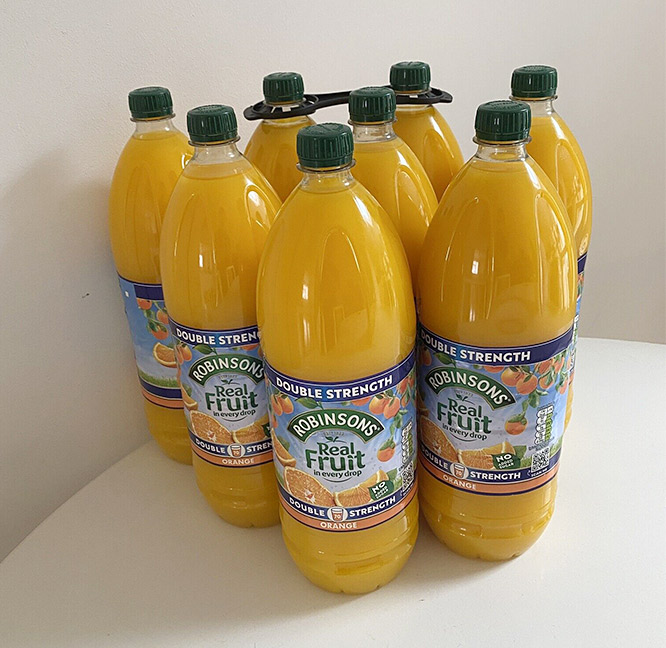
| Robinsons Orange Squash No Added Sugar | Water, Orange Fruit from Concentrate (10%), Acid (Citric Acid), Acidity Regulator (Sodium Citrate), Natural Orange Flavouring with other Natural Flavourings, Preservatives (Potassium Sorbate, Sodium Metabisulphite), Sweeteners (Acesulfame K, Sucralose), Stabilisers (Cellulose Gum, Sucrose Acetate Isobutyrate), Emulsifier (Glycerol Esters of Wood Rosins), Natural Colour (Carotenes) |
| Ribena Blackcurrant Squash No Added Sugar | Water, Blackcurrant Juice from Concentrate (18%), Acids (Malic Acid, Citric Acid), Acidity Regulator (Sodium Gluconate), Vitamin C, Extracts of Carrot and Hibiscus, Preservatives (Potassium Sorbate, SODIUM BISULPHITE), Natural Flavourings. Sweeteners (Aspartame, Acesulfame K, Sucralose). |
Sweeteners – are they a problem?
The main ingredients people worry about in squash are the sweeteners – things like aspartame, sucralose and acesulfame K.
Do they help with weight?
The World Health Organization now advises against using sweeteners as a long-term weight-loss tool. Their review found that while they can cut calories in the short term, people who have them regularly don’t seem to lose body fat over time, and some long-term studies link higher intakes with a small increase in weight or BMI.
Diabetes and heart health
Several large studies have found that people who consume more artificially sweetened drinks have a higher risk of type 2 diabetes and some heart and circulation problems, even after adjusting for things like weight and smoking. These studies can’t prove sweeteners are the direct cause, but they’re not completely reassuring either.
Gut health
Some recent human studies suggest certain sweeteners can change the balance of bacteria in the gut and how some people handle blood sugar, while others show little or no effect. Overall, the evidence in humans is still mixed, so it’s another reason not to overdo sweetener-based drinks.
Bottom line: An occasional glass of no added sugar squash is unlikely to cause problems for most people. The concern comes from relying on sweetener-based drinks regularly.
Calories and sugar in no added sugar squash
Calories: very low
When you make squash the way the label suggests, it’s very low in calories – usually around 1–2 kcal per 100ml. So even a 200ml glass is only 2–4 calories, and a 250ml glass is still barely anything.
Does no added sugar squash still contain sugar?
Yes, but only tiny amounts. The sugar comes from the small amount of fruit juice concentrate, not added sugar.
Most brands have about 0.1–0.3 g of sugar per 100ml, which works out to roughly 0.25–0.75 g in a standard glass.
For context, 1 teaspoon = ~4 g of sugar, so this is well under a quarter of a teaspoon.
The sugar is so low that it’s rarely the main concern – sweeteners are the bigger question, which we’ve already covered.
Does no added sugar squash offer any nutrients?
Not really.
Most no added sugar squashes contain no vitamins, no fibre, no minerals and no meaningful nutrients once diluted. A few brands add small amounts of vitamin C, but it’s usually so low that it won’t make a real difference to your overall intake.
So while squash can make water taste nicer, it shouldn’t be seen as a source of nutrition – it’s basically flavoured water with sweeteners.
In terms of nutritional values, here’s how the top UK no added sugar squash brands compare side by side:
| Nutritional values per 100ml diluted | Robinsons Orange Squash No Added Sugar | Ribena Blackcurrant Squash with No Added Sugar | Vimto Original No Added Sugar |
| Energy | 1kcal | 2kcal | 2kcal |
| Fat | 0 | 0 | 0 |
| Carbohydrate | negligible | negligible | 0.3g |
| Protein | 0 | 0 | 0 |
| Fibre | 0 | 0 | 0 |
| Salt | 0.03g | <0.5g | 0.01g |
So… is no added sugar squash healthy or not?
No, it’s not a healthy drink.
It’s low in calories and sugar, but it doesn’t offer any useful nutrients, and it relies entirely on artificial sweeteners, which come with mixed research around long-term health. It’s fine as an occasional flavour boost for water, but not something to rely on every day.
What about your teeth?
No added sugar squash is still acidic, and acidic drinks can wear down tooth enamel over time. This isn’t about sugar – it’s the acidity itself. If you sip squash all day, your teeth stay in that acidic environment for longer, which increases the risk of enamel erosion. Using a straw, keeping it to mealtimes and drinking water between glasses can help.
Is it good for weight loss?
It can help you cut calories in the short term because it’s so low in energy, but it’s not a great long-term weight-loss strategy. Sweeteners don’t seem to help with fat loss over time, and some studies link higher intakes with weight gain, changes in appetite and a higher risk of type 2 diabetes.
So if weight loss is your goal, squash is okay as an occasional lower-calorie option – just don’t rely on it every day or expect it to help on its own.
Better everyday drink options
If you like the taste of squash but don’t want to rely on sweeteners, you could try:
- Water with a slice of lemon, lime or orange
- Sparkling water with a small splash of regular squash or juice
- Herbal or fruit teas (unsweetened)
- Infused water – a jug or bottle with mint, berries, cucumber or citrus left in the fridge
These still give you some flavour, but without depending on sweetened drinks every day.
FAQs
Can diabetics drink no added sugar squash?
Yes, most people with diabetes can have it in moderation, as it’s very low in sugar – but no added sugar doesn’t mean no sugar at all, so it’s still worth checking the label and watching your portion size.
Newer research also suggests that having a lot of sweeteners every day may not be ideal for blood sugar or long-term diabetes risk, so it’s best as an occasional drink, with water as your main choice.
Is no added sugar squash safe in pregnancy?
Yes, it’s generally considered safe, but drinks with artificial sweeteners have been linked in some studies to a higher risk of having a heavier baby or a child who is overweight, so it’s best to keep squash as an occasional drink and stick to water as your main choice.
Can babies or young children have no added sugar squash?
The NHS advises against it. Even without added sugar, squash is still sweet and acidic, which isn’t great for teeth or for developing a preference for very sweet drinks. Water or milk is best.
Is drinking no added sugar squash as good as drinking water?
The NHS advises that we should drink six to eight glasses of fluid a day. This can include water, lower-fat milk and lower-sugar or sugar-free drinks, such as fruit squash or diet soda.
So, if you’re trying to up your water intake, drinking no added sugar squash is a great way to do it.
Is no added sugar squash keto?
Mostly yes. It’s very low in carbs and sugar, so it fits into a keto diet, but the sweeteners may still trigger cravings for some people.
Is it free on Slimming World?
Yes – no added sugar squash is a “Free” drink on Slimming World, so you don’t need to count it. Still, it’s worth keeping an eye on how much you’re drinking because of the sweeteners.
Curious about other drinks?
If you liked this post, you might also enjoy these:
- Is No Added Sugar Juice Healthy?
- Is Ocean Spray Cranberry Juice good or bad for you?
- Is Rubicon healthy?
- Is Ribena good for you?
- Is Robinsons Squash bad for you?
- Vimto Squash: Is it Healthy or Not?
Each one takes a closer look at what’s really inside these popular drinks — from sugar and sweeteners to any genuine health benefits.

Petra Nakashian (previously Kravos) has been writing about health and healthy living for over 10 years. She covers nutrition, natural health, and everyday wellness topics, with a focus on clear, practical advice you can actually use. Petra enjoys digging into health books, studies, and reputable research to check health claims, because there’s a lot of advice online that sounds convincing but isn’t accurate.