Recently updated on November 27th, 2025 at 1:27 pm
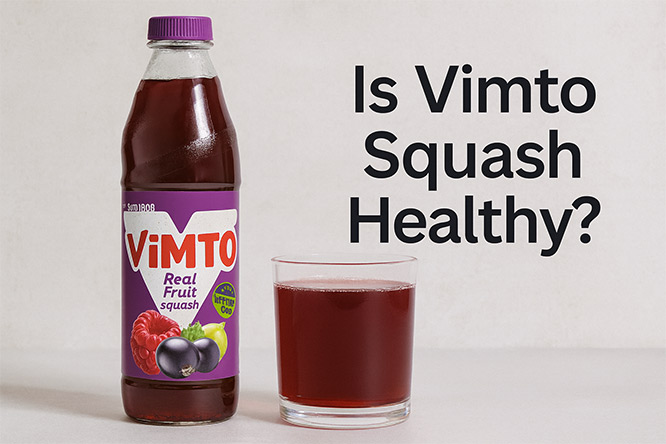
Vimto looks like a “better” squash option at first glance. There’s mixed fruit on the label, a bit of grape, blackcurrant and raspberry juice, and added vitamins C and D. It sounds almost healthy.
But it’s still a sweet, flavoured drink – so how good is it really?
In this post I’ll go through what’s actually in Vimto, how many calories and how much sugar it has, what’s happening with the artificial sweeteners, and where the No Added Sugar version fits in.
By the end, you’ll know whether Vimto is more of an occasional treat or something you’re happy to drink more regularly.
Is Vimto squash healthy? (Quick answer)
Original Vimto isn’t a healthy drink – it contains added sugar, artificial sweeteners and is quite acidic. The added vitamins sound good, but they don’t change the fact that it’s still a sweet, processed squash. Even the No Added Sugar version relies on artificial sweeteners, which aren’t great for long-term health if you drink them often.
What’s really inside Vimto? (Ingredients explained simply)
Here’s a quick look at what’s in the original Vimto squash (and where the No Added Sugar version fits in):
- Fruit juice from concentrate (10%)
Grape, blackcurrant and raspberry from concentrate – a bit of “real fruit”, but not enough to make it a genuinely healthy fruit drink. - Sugar (original Vimto only)
Added sugar means extra calories and more impact on blood sugar and teeth if you drink it regularly. - Sweeteners (both versions)
Sucralose and acesulfame K help cut sugar and calories but may cause digestive issues in some people and aren’t ideal for long-term health if you rely on them every day. - Flavourings and colours
“Vimto flavouring” made with natural extracts of fruits, herbs, barley malt and spices.
Colour comes from carrot and hibiscus concentrates, not artificial colourings. - Preservatives
Sodium benzoate and potassium sorbate help keep the squash fresh for longer. - Acidity regulators
Citric acid (and malic acid in the no added sugar version) plus sodium citrate make it tangy and stable – but also add to the acidity, which matters for teeth. - Added vitamins C and D
A small nutritional bonus, but mostly there to make the drink sound healthier. You wouldn’t choose Vimto as your main source of these vitamins.
What Vimto doesn’t contain
Vimto squash is caffeine-free and doesn’t contain aspartame, artificial colourings or artificial flavourings.
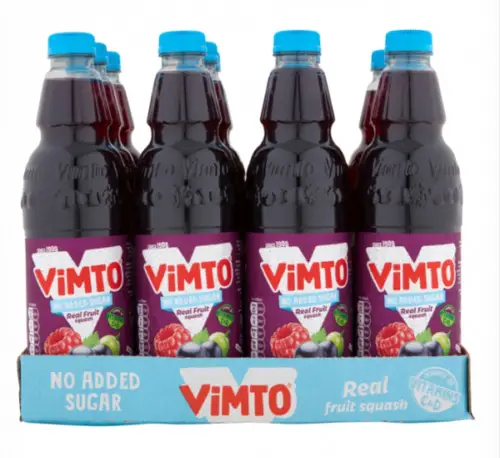
No Added Sugar Vimto – is it any better?
The No Added Sugar version has the same 10% fruit juice and similar flavourings and colours as the original, but without the added sugar. That means fewer calories, which is helpful if you’re watching your intake.
Instead of sugar, it relies fully on artificial sweeteners (sucralose and acesulfame K). These don’t add calories, but they can cause digestive discomfort in some people, and long-term consumption of artificial sweeteners has been linked to various negative health effects – even weight gain in some cases.
I’d drink this only once in a while, not regularly.
How many calories are in Vimto squash?
A 200ml glass of original Vimto squash (made up as directed) contains around 38 kcal and 9.4g of sugar – that’s just over two teaspoons of sugar. Per 100ml, you get about 19 kcal and 4.7g of sugar, which is already more than one teaspoon.
So it’s a bit lighter than cola or orange juice, but it’s still a sugary drink, not a low-calorie option.
The No Added Sugar Vimto is much lower in calories – only about 2 kcal and 0.3g of sugar per 100ml (around 4 kcal per 200ml). The calories are tiny, but remember this version relies on artificial sweeteners instead of sugar.
Sugar, acidity and teeth – what does Vimto do to your mouth?
Original Vimto is a double hit for your teeth: it contains sugar and is acidic. Sugar feeds the bacteria in your mouth, which produce acids that cause tooth decay. On top of that, the citric acid in Vimto can slowly wear away enamel, especially if you sip it often.
The No Added Sugar version cuts the sugar right down, but it’s still acidic (thanks to citric acid and malic acid), so it can still contribute to enamel erosion over time.
If you or your children drink Vimto, it’s better to have it with meals, dilute it well and avoid sipping it continuously between meals. Water is a much better choice for regular, all-day drinking.
Is Vimto squash ever a “good” choice?
In my opinion, Vimto is fine as an occasional treat, not an everyday drink. If you fancy something fruity and caffeine-free instead of cola or energy drinks, a small glass now and then isn’t the end of the world.
I wouldn’t use Vimto for everyday hydration though – water, herbal tea or very lightly flavoured drinks are much better options for that. And while the added vitamin C and D sound nice, I wouldn’t rely on a sugary or artificially sweetened squash for nutrients. I’d rather get these vitamins from food or, if needed, a good quality supplement.
Vimto vs Ribena: is one healthier?
Honestly, neither Vimto nor Ribena is a healthy drink – they’re very similar overall.
However, Ribena does have a couple of small advantages: it contains more juice (about 25% blackcurrant juice from concentrate) and slightly less sugar per 100ml (around 4.1g, just over a teaspoon), which might sway you if you’re choosing between the two. But it still contains both sugar and sweeteners, just like Vimto.
Both drinks use natural colours and flavours (no artificial ones) and both have no added sugar versions that rely on sweeteners only. Vimto adds vitamins C and D, Ribena adds vitamin C. In the end, they’re still sweet, acidic squashes best kept as occasional drinks.
Vimto squash FAQs
Can you drink Vimto squash when pregnant?
In small amounts, yes – Vimto is caffeine-free. But because it contains sugar and artificial sweeteners, it’s better as an occasional drink, not something you sip all day. If you’re unsure, check with your midwife or doctor.
Does Vimto squash have aspartame?
No. Both the original and No Added Sugar Vimto use sucralose and acesulfame K, not aspartame.
Is Vimto squash acidic?
Yes. Like most fruity soft drinks, it contains acids such as citric acid (and malic acid in the No Added Sugar version), which can wear down tooth enamel if you drink it too often.
Is Vimto good for weight loss?
Not really. The original version contains sugar and adds extra calories. The No Added Sugar version is much lower in calories, but it still contains artificial sweeteners. For weight loss, water, herbal tea and other drinks without sugar or sweeteners are a better everyday choice.
Final thoughts
Vimto might taste great, but it’s still a sweet, acidic squash – whether you choose the original or the No Added Sugar version. Enjoying it occasionally is absolutely fine, but for everyday drinking, water or lightly flavoured unsweetened options are much better for your health (and your teeth).
If you’re also wondering about other drinks on the shelves, you might find these helpful:
- Is no added sugar juice healthy?
- Is no added sugar squash good or bad for you?
- Are Innocent smoothies actually healthy?
- Is Rubicon juice a healthy choice?

Petra Nakashian (previously Kravos) has been writing about health and healthy living for over 10 years. She covers nutrition, natural health, and everyday wellness topics, with a focus on clear, practical advice you can actually use. Petra enjoys digging into health books, studies, and reputable research to check health claims, because there’s a lot of advice online that sounds convincing but isn’t accurate.