Recently updated on January 27th, 2026 at 10:46 am
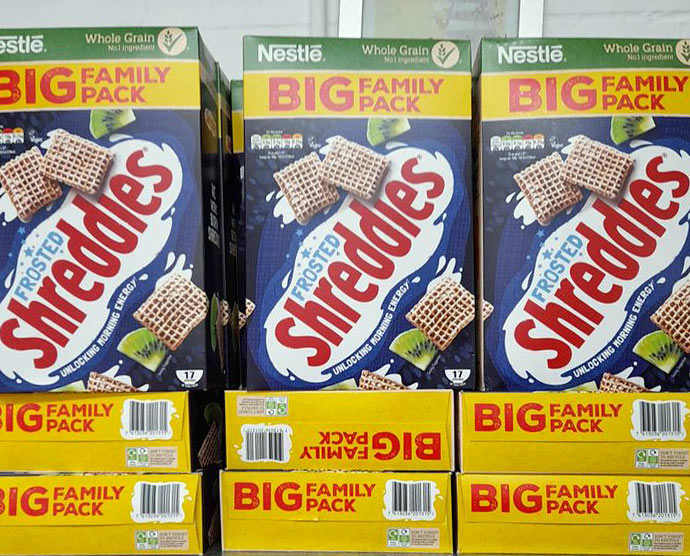
If you grab a box of Shreddies in the supermarket, it really does look like a healthy choice. Whole grain, fibre, “keeps hunger locked up” – it all sounds promising. But you might still be wondering: are Shreddies actually good for me?
Short answer: Original Shreddies are a fairly healthy cereal. They’re mostly whole grain wheat, high in fibre and fortified with vitamins and iron, but they also contain a moderate amount of added sugar and are still ultra-processed.
Let’s take a closer look at what’s really in Shreddies, how healthy they are, and whether they’re a good fit for your breakfast.
What’s actually in Shreddies?
There are three main types of Shreddies you’ll see in UK supermarkets: Original Shreddies, Coco Shreddies and Frosted Shreddies. Here I’m focusing mainly on the Original, as that’s the one most people eat regularly.
Ingredients in Original Shreddies (UK):
- Whole grain wheat (96%)
- Sugar
- Invert sugar syrup
- Barley malt extract
- Molasses
- Salt
- Added vitamins (B1, B2, niacin, folic acid, B12) and iron
The good news is that whole grain wheat is the main ingredient, which is where the fibre comes from, and there are no artificial colours or flavours.
The less good news is that there are still added sugars (sugar, invert sugar syrup, molasses) and some salt, so it isn’t a sugar-free or “perfect” cereal.
Coco Shreddies and Frosted Shreddies use the same whole grain base but have more added sugar and flavourings, so they’re sweeter and less healthy overall.
If you want to see how all three compare side by side, check the ingredients table just below.
| Shreddies Flavour | Ingredients |
| The Original | Whole grain WHEAT (96.1%), sugar, invert sugar syrup, BARLEY malt extract, salt, molasses, iron, vitamin B3, B5, B9, B6, B2 |
| Coco | Whole grain WHEAT (80.9%), sugar, invert sugar syrup, BARLEY malt extract, cocoa powder (1.8%), fat-reduced cocoa powder (1.3%), salt, bulking agent: calcium carbonate, molasses, flavourings, iron, vitamin B3, B5, B9, B6, B2 |
| Frosted | Whole grain WHEAT (84.8%), sugar, inverted sugar syrup, BARLEY malt extract, salt, molasses, flavourings, iron, vitamin B3, B5, B9, B6, B2 |
Shreddies nutrition in detail
Now let’s look at what you actually get in a typical 40 g bowl of Original Shreddies.
Carbs and sugar
- Carbohydrates per 40 g: 28.2 g
- of which sugars: 5 g (just over 1 teaspoon)
Most of the carbs in Shreddies come from whole grain wheat, which is digested more slowly than very refined grains. The 5 g of sugar in a 40 g bowl is a moderate amount – not super low, but not in “treat cereal” territory either.
Per 100 g, Original Shreddies have about 12.5 g of sugar, which puts them in the medium sugar range on UK labels.
The flavoured versions are noticeably sweeter: Coco Shreddies and Frosted Shreddies have around 8.9 g of sugar per 40 g serving, which pushes them into the high-sugar category per 100 g.
To put this into context, here’s how some popular UK cereals compare for sugar per 100 g, from highest to lowest:
| Cereal | Sugar per 100 g |
|---|---|
| Kellogg’s Frosties | 37 g |
| Kellogg’s Crunchy Nut Corn Flakes | 35 g |
| Frosted Shreddies | 22.4 g |
| Coco Shreddies | 22.2 g |
| Kellogg’s All-Bran Fibre Plus | 15 g |
| Kellogg’s Special K Original | 15 g |
| Kellogg’s Bran Flakes | 14 g |
| Original Shreddies | 12.5 g |
| Weetabix Original | 4.2 g |
As you can see, Original Shreddies are on the lower side for sugar compared with many popular cereals, although they’re not as low in sugar as Weetabix.
Fibre
Fibre is one of the main positives of Shreddies. A 40 g bowl of Original Shreddies provides 4.8 g of fibre, which is roughly 16% of the 30 g a day that adults are advised to aim for. Per 100 g, they contain around 12 g of fibre, which counts as high fibre.
This can help support regular bowel movements and, as part of an overall high-fibre diet, may play a role in long-term heart and bowel health.
Protein
A 40 g serving of Original Shreddies contains 4.3 g of protein. That’s a useful amount for a cereal, but it doesn’t make Shreddies a high-protein breakfast.
For most adults it works out at around 8–10% of daily protein needs, so it’s more of a top-up than a main source.
If you want your breakfast to be more filling, it helps to add extra protein from milk or yoghurt, and perhaps some nuts or seeds.
Fat and salt
Shreddies are naturally low in fat. A 40 g serving contains just 0.7 g of fat, with only 0.1 g as saturated fat, which is very low.
Salt is a bit higher but still in the medium range, at about 0.29 g per 40 g serving.
Calories
A 40 g bowl of Original Shreddies without milk provides 146 calories. With around 125 ml of semi-skimmed milk, your breakfast will usually come to roughly 210 calories in total.
That’s a reasonable amount for an adult breakfast. The main thing to watch is how much you pour: if you regularly have 60 g or more instead of 40 g (very common!), the calories and sugar go up by half again without you really noticing.
Vitamins and minerals
Shreddies are also fortified with vitamins and minerals, including thiamin (B1), riboflavin (B2), niacin, folic acid, vitamin B12 and iron.
A typical 40 g serving provides roughly a quarter of the daily recommended amount for several of these nutrients. They help your body release energy from food, support a healthy nervous system and red blood cell production, and can help reduce tiredness if your diet is low in these vitamins and iron.
Putting it all together: are Shreddies a healthy choice?
Overall, Original Shreddies are a reasonably healthy cereal for most people. They’re made mostly from whole grain wheat, are high in fibre, low in fat and give you a useful top-up of B vitamins and iron. The sugar content is on the lower side compared with many popular cereals.
The main downsides are that Shreddies are still an ultra-processed, sweetened cereal and it’s easy to pour more than the suggested 40 g serving. If you enjoy them, they can fit into a healthy diet, especially when you keep portions sensible, add some protein and fruit, and balance them with other high-fibre whole foods through the day.
FAQs
Are Shreddies good for people with diabetes?
Original Shreddies are not ideal if you have diabetes. They’re high in carbs and contain added sugar, so they can raise blood sugar quite quickly, especially in bigger portions.
If you do choose to eat them, it’s best to have a small, measured serving, pair them with protein and healthy fats (like yoghurt, milk, nuts or seeds), and follow the advice of your diabetes nurse or dietitian about how often they fit into your diet.
Can babies have Shreddies?
Shreddies are not a good everyday cereal for babies, especially under 1 year old as they contain added sugar and are quite high in fibre.
UK guidance for babies recommends keeping added sugar as low as possible and being careful with very high-fibre foods, as these can fill babies up before they get all the energy and nutrients they need. Shreddies are also harder in texture, so they’re not as baby-friendly as softer cereals.
For babies from around 6 months, options like plain porridge, Ready Brek or Weetabix (well softened with breast milk, formula or full-fat cow’s milk) are usually better choices for regular breakfasts.
Are Shreddies good for weight loss?
Original Shreddies can be part of a weight loss plan if you stick to the recommended 40 g serving and keep toppings sensible. They’re fairly low in calories, high in fibre and low in fat, which can help with fullness.
Just remember they contain some added sugar and aren’t very high in protein, so adding something like Greek yoghurt, nuts or seeds will make your breakfast more satisfying.
Can you have Shreddies on Slimming World?
Coco and Frosted Shreddies are not included in the Slimming World diet and must be counted as a syn. However, the original kind is allowed in a 40g portion.
You might also like my reviews of:
Special K Cereal
Kellogg’s All-Bran Cereal
Bran Flakes
Weetabix
Krave
Rice Krispies
Alpen Muesli

Petra Nakashian (previously Kravos) has been writing about health and healthy living for over 10 years. She covers nutrition, natural health, and everyday wellness topics, with a focus on clear, practical advice you can actually use. Petra enjoys digging into health books, studies, and reputable research to check health claims, because there’s a lot of advice online that sounds convincing but isn’t accurate.