Recently updated on January 27th, 2026 at 10:45 am
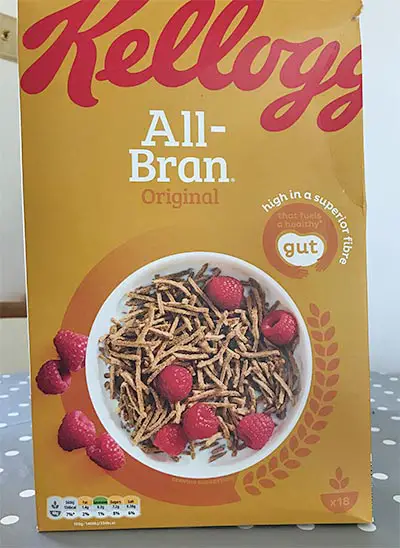
When you pick up a box of Kellogg’s All-Bran, you’ll notice it mentions “high in superior fibre” and “fuels a healthy gut.” Sounds pretty healthy, right? But I still wonder if it’s really good for me. Many brands make big claims, but that doesn’t always mean their products are healthy. So, what’s the real deal with All-Bran? Is it good for you, or not? Let’s find out.
So, is All-Bran good for you?
All-Bran can be good for you, especially if you want to eat more fibre. It’s a high-fibre cereal with added vitamins and iron, but it also has a moderate amount of added sugar, so it’s best in sensible portions as part of a balanced diet.
What’s Actually in All-Bran?
In the UK, the classic All-Bran Original is now sold as All-Bran Fibre Plus, but the idea is the same. It is a very high-fibre wheat bran cereal with added vitamins and minerals.
The ingredients list looks like this: wheat bran (78%), wholewheat flour, sugar, barley malt extract, salt, niacin, iron, vitamin B6, riboflavin, thiamin, folic acid, vitamin D and vitamin B12.
The good news is that wheat bran is the main ingredient, which is where the fibre comes from, and there are no artificial colours or flavours.
The less great part is that sugar and barley malt extract are still in there for sweetness, so although All-Bran looks very “healthy”, it is not completely sugar free.

All-Bran Nutrition in Detail
Carbs and Sugar
A 40 g serving of All-Bran gives you 19 g of carbohydrates and 5.9 g of sugar. That is just under one and a half teaspoons of sugar (1 teaspoon is about 4 g).
Per 100 g, it works out at 47 g of carbs and 15 g of sugar, which is a moderate sugar level for a breakfast cereal.
Most of the carbs come from wheat bran, which is slower to digest than refined grains, but the added sugar still counts.
If you tend to pour a big bowl rather than sticking to 40 g, your sugar intake can quickly double.
Fibre
This is where All-Bran really stands out. A 40 g serving provides 10 g of fibre. Adults are advised to aim for about 30 g of fibre a day, so one bowl gives you roughly a third of that.
Per 100 g, it has 26 g of fibre, which is classed as very high. The fibre from wheat bran helps to bulk up stools and speed up how quickly things move through your gut, which is why All-Bran is often recommended when you struggle with constipation.
Protein
Each 40 g serving contains about 5 g of protein. That’s a useful amount for a cereal and roughly 10% of the daily protein needs of an average adult, so All-Bran can count as a source of protein.
However, it’s still not a high-protein breakfast on its own. To make your bowl more filling, it’s a good idea to add extra protein from milk, yoghurt, nuts or seeds.
Calories
A 40 g serving of All-Bran has about 125 calories. With milk, your bowl will usually sit at around 200 calories, which is fairly modest for an adult breakfast.
On its own, All-Bran is unlikely to be a problem from a calorie point of view. The bigger issue is when the portion size quietly creeps up and you end up eating a lot more cereal and sugar than you meant to.
Vitamins and minerals
All-Bran is also fortified with vitamins and minerals. A 40 g serving gives you about half of your daily vitamin D and around a quarter of several B vitamins and iron.
The B vitamins help your body turn food into energy and support a healthy nervous system. Iron, folic acid and vitamin B12 support red blood cell production and can help reduce tiredness if you are low in these nutrients.
So you are not just getting fibre and carbs in your bowl, but a useful top-up of key micronutrients as well.
What are the health benefits of All-Bran, exactly?
Here are the main ones in simple terms:
- Helps with digestion and constipation – The high wheat bran fibre adds bulk and helps things move through your gut more easily, which can ease constipation and support regular bowel movements.
- Supports heart health over time – Getting enough fibre regularly is linked with a lower risk of heart disease, and All-Bran can contribute to that fibre intake as part of a varied, higher-fibre diet.
- Supports brain and nerve function – The added B vitamins, including folic acid and B12, help your body turn food into energy and support normal brain and nervous system function.
- May help with weight management: High-fibre foods tend to keep you fuller than low-fibre ones, so a bowl of All-Bran can help with fullness and may support weight control when you keep your portion sensible and add some protein or healthy fats.
Just remember that larger portions also mean more sugar. If you already eat a lot of sugary foods, big bowls of All-Bran are not ideal. But if your overall sugar intake is fairly low and you stick to a sensible serving, the sugar in a bowl of All-Bran is unlikely to be a major concern.
Things to watch out for
- Added sugar
All-Bran looks very “healthy”, but it does contain added sugar. A normal 40 g serving is fine for most people, but big bowls or extra sweet toppings can push your sugar intake up, which isn’t ideal if you’re watching sugar or have diabetes. - Very high fibre
If you’re not used to much fibre, jumping straight to a big bowl of All-Bran can cause bloating or wind. It’s better to start with smaller portions and drink plenty of water so your gut can adjust. - It’s still ultra-processed
All-Bran is based on wheat bran, but it’s still an ultra-processed breakfast cereal with added sugar and added vitamins. It can be part of a healthy diet, but you should still get plenty of fibre from whole foods like oats, fruit, vegetables, beans and lentils.
Bottom line: is All-Bran a good choice?
All-Bran can be a good choice if you’re trying to eat more fibre. A small bowl gives you a big fibre boost plus vitamin D, B vitamins and iron, and it can help with digestion and regularity.
At the same time, it’s still an ultra-processed cereal with added sugar, so it’s not something to eat in huge portions or rely on as your only source of fibre. If you enjoy it, keep your serving sensible, avoid piling on extra sugar and mix it with plenty of other high-fibre whole foods through the day.
FAQs
Is All-Bran good for people with diabetes?
All-Bran is generally one of the better cereal choices if you have diabetes because it’s high in fibre and has a gentler effect on blood sugar than many sugary, low-fibre cereals. However, it still contains added sugar and carbohydrates, so portion size is important.
If you have diabetes and enjoy All-Bran, stick to a measured serving, have it with some protein and healthy fats (like yoghurt, milk, nuts or seeds), and keep an eye on how it affects your own blood sugar. Always follow the advice from your diabetes nurse, dietitian or doctor.
How much All-Bran should I eat for breakfast?
Stick to the recommended 40g serving to manage sugar intake and calories effectively.
Can I eat All-Bran every day?
Yes, All-Bran can be part of a healthy daily diet, especially when balanced with other foods.
Is All-Bran suitable for a gluten-free diet?
No, All-Bran is made from wheat bran, which contains gluten.
Can I eat All-Bran on a low-carb diet?
All-Bran contains 19g of carbs per 40g serving, which is moderate but might still be high if you’re strictly managing your carb intake, as many low-carb diets restrict daily carbs to between 20 and 50g.
While All-Bran is rich in fibre and lower in carbs compared to many other cereals, it could use up a large portion of your carb allowance if eaten regularly. For a low-carb diet, it may be best to enjoy All-Bran occasionally and in controlled portions.
Is All-Bran fattening, and can it help with weight loss?
All-Bran with skimmed or semi-skimmed milk usually comes in at around 200 calories, which is quite modest for an adult breakfast. On its own, that makes it unlikely to cause weight gain if you stick to a sensible portion.
Because it’s high in fibre, All-Bran can help you feel fuller for longer, which may support weight loss when it’s part of an overall calorie-controlled diet. However, it does contain added sugar, and big bowls or extra sweet toppings will push both sugar and calories up.
In the end, your overall eating pattern and portion sizes matter more for weight loss than any single cereal.
Other cereals I’ve looked at:
Shreddies
Special K Cereal
Bran Flakes
Weetabix
Krave
Rice Krispies
Alpen Muesli

Petra Nakashian (previously Kravos) has been writing about health and healthy living for over 10 years. She covers nutrition, natural health, and everyday wellness topics, with a focus on clear, practical advice you can actually use. Petra enjoys digging into health books, studies, and reputable research to check health claims, because there’s a lot of advice online that sounds convincing but isn’t accurate.