Recently updated on January 27th, 2026 at 10:34 am

Weetabix has been a breakfast staple in the UK since 1932, helping families kick-start busy days with a quick, filling meal. But is it truly a healthy choice?
From the classic biscuit to the on-the-go drink, let’s explore what makes Weetabix a good choice nutritionally – and see whether it lives up to its healthy reputation.
Quick Answer: Is Weetabix Actually Healthy?
Yes, Weetabix is generally healthy! Despite a small amount of added sugar, it’s made with whole grains, fibre, and enriched with vitamins and minerals. Plus, it’s lower in sugar than many other cereals.
If you’d like the full picture, keep reading – I’ll break down exactly how healthy Weetabix really is.
What’s Inside a Weetabix Biscuit?
The classic Weetabix keeps it simple with just a few key ingredients:
- Wholegrain Wheat (95%): Rich in fibre, protein, vitamins, and antioxidants.
- Malted Barley Extract: Adds a mild sweetness.
- Small Amounts of Sugar and Salt: For flavour balance.
Additionally, Weetabix is fortified with Niacin, Iron, Riboflavin (B2), Thiamin (B1), and Folic Acid, boosting its nutritional value. For a sweeter option, there’s a chocolate version with plain chocolate (7%) and reduced-fat cocoa powder.
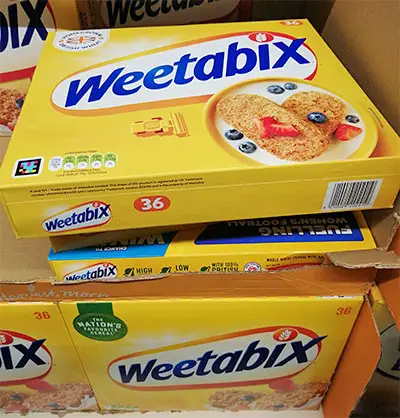
Weetabix Nutrition in Detail
Weetabix recommends a two-biscuit serving per meal. Let’s take a closer look at the nutrients in this portion to see exactly what benefits Weetabix offers your body.
Here’s a quick nutritional comparison of Weetabix flavours per serving (2 biscuits).
| Nutritional Value | Original (2 biscuits, 37.5g) |
Chocolate (2 biscuits, 45g) |
Banana (2 biscuits, 44g) |
| Carbs | 26g | 31g | 31g |
| Sugar | 1.6g | 7.7g | 5.7g |
| Fibre | 3.8g | 4.5g | 4.4g |
| Protein | 4.5g | 4.5g | 4.8g |
| Fat | 0.8g | 1.7g | 0.8g |
| Saturated Fat | 0.2g | 0.7g | 0.2g |
| Salt | 0.1g | 0.08g | 0.10g |
| Calories | 136 cals | 165 cals | 159 cals |
Carbohydrates
Carbohydrates provide essential fuel for your body, making them a breakfast staple. Classic Weetabix offers 26g of carbs per serving, with only 1.6g as sugar.
Made with whole grains, Weetabix provides “healthy carbs” that help you stay fuller longer, potentially reducing the urge to snack between meals.
The Eatwell Guide suggests that a third of our daily diet should come from carbs, with a focus on whole grains—making Weetabix a solid choice to help meet these daily goals.
Sugar Content
Classic Weetabix contains just 1.6g of sugar per 2-biscuit serving – that’s under half a teaspoon (1 teaspoon of sugar is about 4g) – and only 4.2g of sugar per 100g, which is really low for a breakfast cereal.
To put that into perspective, Frosties have about 13g of sugar per 35g serving, and Crunchy Honey & Nut Clusters contain a similar amount per 35g. Even Chocolate Weetabix, with 7.7g of sugar per serving, has less sugar than many other popular options.
Fibre
Classic Weetabix provides 3.8g of fibre per 2-biscuit serving. That makes it a higher-fibre cereal that helps you work towards the recommended 30g of fibre a day. With 10g of fibre per 100g, it also meets the official criteria for a “high fibre” claim on food labels.
Interestingly, Banana and Chocolate Weetabix are slightly higher in fibre (around 4.4–4.5g per serving), but they also come with more sugar, so the Original version is usually the best everyday choice.
The higher fibre content from wholegrain wheat helps support healthy digestion and regular bowel movements, so together with other high-fibre foods and plenty of water, Weetabix may help if you struggle with constipation.
For even more fibre, you can top your Weetabix with berries, sliced banana, nuts or seeds, which can easily push your bowl into the 7–10g fibre range.
Compared to many popular cereals, Weetabix contains much more fibre. For example, Kellogg’s Cornflakes contains just 3g of fibre per 100g.
Protein
Protein helps keep you fuller for longer, which is useful if you’re trying to avoid mid-morning snacking or support weight management.
A standard serving of 2 Original Weetabix (37.5g) provides 4.5g of protein. That’s not a “high-protein” food, but it does count as a source of protein, giving around 10% of the daily protein needs of an average woman (about 45g/day) and roughly 8% for an average man (around 55g/day).
If you’d like more protein from your breakfast, you have two main options:
- Weetabix Protein – two Protein biscuits (40g) provide 7.6g of protein per serving, so a bit more than the classic version while still being low in sugar and fat.
- Higher-protein toppings – adding Greek yoghurt, milk, nuts, seeds or a spoonful of nut butter on top of your Weetabix will increase both the protein and staying power of your breakfast.
So, Weetabix on its own is moderate in protein, but becomes a more filling, balanced meal when you pair it with extra protein-rich foods.
Counting Calories: How Many are in a Bowl of Weetabix?
Two Original Weetabix biscuits contain around 136 calories. If you add 125ml of semi-skimmed milk, that’s roughly another 64 calories, giving you a bowl of about 200 calories in total – a fairly modest breakfast for most adults.
The flavoured Weetabix options, such as Chocolate or Banana, are slightly higher in calories. Here you can see how the different flavours compare side by side:
| Flavour | Calories in 1 Weetabix | Calories in 2 Weetabix | Calories in 3 Weetabix |
| Classic | 68 | 136 | 204 |
| Chocolate | 82 | 165 | 247 |
| Banana | 79 | 159 | 238 |
Vitamins and Minerals
Original Weetabix is fortified with several B vitamins – thiamin (B1), riboflavin (B2), niacin and folic acid (folate) – plus iron. Based on the pack values, a 2-biscuit serving gives you roughly a third of your daily needs for these nutrients, which is a decent boost from one bowl of cereal rather than just carbs and calories.
The B vitamins in Weetabix help your body release energy from food and support the nervous system, while iron is important for red blood cell production and can help reduce tiredness and fatigue.
Folic acid (folate) in Weetabix
Two Original Weetabix biscuits provide about 64µg of folic acid. For most adults, the recommended intake from food is around 200µg a day, so a bowl of Weetabix can cover roughly a third of that.
If you’re trying for a baby or in the first 12 weeks of pregnancy, UK guidelines still recommend a 400µg folic acid supplement on top of folate from food – Weetabix can help top up your intake but doesn’t replace the need for a supplement.
Health benefits of Weetabix
Because it’s made from wholegrain wheat and fortified with B vitamins and iron, Original Weetabix can offer a few everyday health benefits:
- Supports digestion and more regular bowel movements, thanks to its higher fibre content
- Helps your body turn food into energy and supports a healthy nervous system, due to the added B vitamins
- Helps top up your iron intake, which supports healthy red blood cells and can reduce tiredness if you’re low in iron
- Fits well into a balanced diet, as it’s relatively low in sugar and fat compared to many breakfast cereals
Weetabix isn’t a miracle food, but as part of a balanced breakfast with milk or yoghurt and some fruit, nuts or seeds, it can be a simple, healthy way to start the day.
Putting it all together: is Weetabix a healthy choice then?
FAQs
Is Chocolate Weetabix Healthy?
Chocolate Weetabix includes 84% wholegrain wheat, some sugar, plain chocolate, and fat-reduced cocoa, along with added B vitamins and iron. With 7.7g of sugar per serving (nearly 2 teaspoons), it offers fibre and whole-grain benefits but has higher sugar than Classic Weetabix.
While it’s healthier than many sugary cereals, those aiming for weight loss might benefit more from lower-sugar, high-protein breakfasts like eggs and fruit, which help keep you fuller longer.
Is Porridge Better Than Weetabix?
Porridge has a slight advantage because it contains no added sugar and can be easily customized with healthy toppings like bananas or berries. However, Weetabix is still a convenient, nutritious option for busy mornings. Both are excellent choices for a fibre-rich start to your day, so it really depends on your preference and schedule.
Is 2 Weetabix Enough for Breakfast?
For many people, two Weetabix are filling enough until lunchtime, but it depends on your appetite and activity level. If you need more, add toppings like nuts, seeds, fruit, or almond butter for extra energy.
Is Weetabix On The Go Healthy?
While Weetabix On The Go can be a quick option when you’re pressed for time, it’s not as nutritionally balanced as a bowl of classic Weetabix cereal. A 250ml serving of the Vanilla flavour contains 210 calories, 4.8g of fat (3g of saturated fat), and 12g of sugar, which is 3 teaspoons.
Though it does offer fibre, protein, and added vitamins like B1, B2, niacin, and iron, the higher sugar content makes it less ideal as a regular breakfast choice. For sustained energy and lower sugar, a classic Weetabix cereal bowl with fresh toppings is a better option.
Is Weetabix Good for Weight Loss?
Weetabix can be a helpful part of a weight loss plan. Its whole grains and fibre help you feel fuller longer, making it a satisfying breakfast choice that’s lower in sugar than many cereals. The classic variety is also low in fat, which can be beneficial for those moving away from high-sugar, high-fat breakfast options.
However, eating Weetabix alone won’t lead to weight loss. For best results, pair it with a balanced, calorie-controlled diet and an active lifestyle. Weight loss relies on overall habits, not just a single healthy swap.
Can Babies Eat Weetabix?
Weetabix isn’t suitable for babies under six months. Once your baby is over six months and weaning is established, you can introduce Weetabix as part of their diet. The Department of Health suggests mashing or softening family foods, like Weetabix, to make them easier for toddlers to eat.
Is Weetabix Healthy at Night?
Yes, Weetabix can be a healthy evening snack, as long as you stick to a single portion. Its whole grains, fibre, and moderate protein content make it filling without being too heavy, which can help prevent late-night hunger.
Additionally, pairing it with warm milk can make it a comforting, easy-to-digest option for winding down. Just be mindful of added toppings, as sugar or high-calorie additions may disrupt sleep or increase calorie intake.
Is Weetabix safe in pregnancy?
Yes, for most people Weetabix is safe to eat during pregnancy. It’s a wholegrain cereal that provides fibre, iron and some folic acid, which can all be useful at this time.
Just keep in mind that UK guidelines still recommend a 400µg folic acid supplement in early pregnancy, so Weetabix can only top up your intake, not replace the supplement.
If you have gestational diabetes, coeliac disease or a wheat allergy, check with your midwife or doctor before including it regularly.
Curious about other cereals?
You might also like:
Is Special K Cereal Healthy?
Is Kellogg’s All-Bran Cereal Good For You?
Are Bran Flakes Healthy?
Are Shreddies Healthy?
Are Rice Krispies Healthy?
Is Alpen Muesli Good for You?
Is Kellogg’s Krave Cereal Healthy?

Petra Nakashian (previously Kravos) has been writing about health and healthy living for over 10 years. She covers nutrition, natural health, and everyday wellness topics, with a focus on clear, practical advice you can actually use. Petra enjoys digging into health books, studies, and reputable research to check health claims, because there’s a lot of advice online that sounds convincing but isn’t accurate.