
Recently updated on January 27th, 2026 at 10:57 am
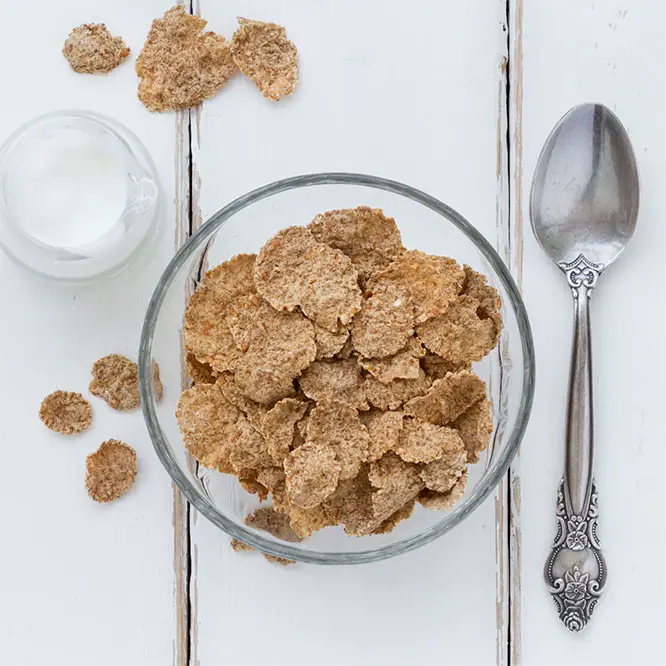
When you see Bran Flakes on the shelf, they really do look like the “good” choice. Brown, full of bran, lots of talk about fibre – it’s the kind of cereal many of us reach for when we’re trying to be a bit healthier. And it’s not just Kellogg’s anymore; most supermarkets have their own version that looks almost identical.
But are Bran Flakes actually healthy, or have you been misled by the label?
Overall, Bran Flakes are a fairly healthy cereal: they’re high in fibre, have a moderate amount of sugar and are fortified with vitamins and iron. They’re also healthier than many sugary cereals, so they can be a good choice if you’re trying to switch to a better breakfast.
Now let’s look at what Bran Flakes are made of, how different UK brands compare, and when they can fit into a healthy breakfast.
What are Bran Flakes made of, exactly?
Let’s start with Kellogg’s Bran Flakes, as that’s the version most people think of.
According to the pack, the main ingredients are:
- Wholewheat – the base of the flakes and the main source of carbohydrate, some protein and fibre.
- Wheat bran – the outer layer of the grain, rich in fibre and helpful for digestion.
- Sugar and glucose syrup – added to make the flakes taste sweeter.
- Barley malt extract and natural flavouring – for flavour and colour.
- Salt – a small amount for taste.
- Added vitamins and minerals – including B vitamins (thiamin, riboflavin, niacin, folic acid, vitamin B12), vitamin D and iron.
So, Bran Flakes are based on wholegrains and wheat bran, which is why they’re high in fibre, but they do still contain added sugar and are still a processed breakfast cereal.
Supermarket own-brand Bran Flakes (from Tesco, Waitrose, Morrisons and others) are very similar – usually a mix of wholewheat and wheat bran with added sugar, salt and the same sort of added vitamins and iron.
Here’s how the main UK Bran Flakes brands compare side by side – what they’re made from and which vitamins and minerals they include.
| BRAND / SUPERMARKET | MAIN INGREDIENTS | VITAMINS & MINERALS |
| Kellogg’s | Wholewheat (59%), wheat bran (18%), wholewheat flour, sugar, barley malt extract, glucose syrup, salt, natural flavouring. | Niacin, iron, vitamin B6, riboflavin, thiamin, folic acid, vitamin D, vitamin B12. |
| Tesco | Wholegrain Wheat (69%), Wheat Bran (20%), Sugar, Barley Malt Extract, Salt | Iron, Vitamin E, Niacin, Pantothenic Acid, Vitamin B12, Vitamin D, Thiamin, Folic Acid, Riboflavin, Vitamin B6. |
| Waitrose | Wholegrain wheat (70%), wheat bran (20%), sugar, barley malt extract, salt | Niacin, vitamin E, pantothenic acid (B5), iron, thiamin (B1), riboflavin (B2), pyridoxine (B6), folic acid, vitamin D, cobalamin (B12). |
| Asda | Whole Wheat (80 %), Wheat Bran (20%), Sugar, Malted Barley Extract, Salt | Iron, Niacin (B3), Pantothenic Acid (B5), Thiamin (B1), Vitamin B12, Folic Acid (B9), Vitamin B6, Riboflavin (B2) |
| Morrisons | Wheat (80%), Wheat Bran (20%), Sugar, Malted Barley Extract, Salt | Niacin, Iron, Pantothenic Acid (B5), Thiamin (B1), Riboflavin (B2), Vitamin B6, Folic Acid, Vitamin B12 |
When you compare these side by side, you can see that all the Bran Flakes brands are built on the same basic idea: wholewheat plus wheat bran, a bit of sugar and salt, and added vitamins and iron.
What stands out is that Kellogg’s has the most complex ingredient list, including glucose syrup (an extra form of added sugar) and “natural flavouring”, which the label doesn’t clearly define.
The supermarket versions tend to look a little simpler on paper – mostly wholegrain wheat and bran with sugar, malt extract, salt and a similar mix of added vitamins and minerals.
Bran Flakes nutrition – how do they stack up?
| BRAN FLAKES BRAND | SUGAR | FIBRE | FAT | PROTEIN | SALT |
| Kellogg’s | 14g | 17g | 2.2g | 11g | 0.66g |
| Tesco | 10.2g | 15.2g | 2.5g | 10.6g | 0.59g |
| Waitrose | 10.5g | 12.9g | 2.6g | 10.7g | 0.73g |
| Asda | 11g | 16g | 2.5g | 12g | 0.28g |
| Morrisons | 11g | 16g | 2.5g | 12g | 0.28g |
Calories and portion size
Bran Flakes are very similar in calories across brands – most sit at around 350–360 kcal per 100 g. That means a typical 30 g serving gives you roughly 105–110 kcal before you add any milk.
To give you a clearer picture, here’s what a small 30 g bowl of Bran Flakes looks like with about 100 ml of milk, depending on the type:
- With skimmed milk: about 140 kcal in total
- With semi-skimmed milk: about 155 kcal in total
- With whole milk: about 175 kcal in total
- With unsweetened almond milk: about 120–125 kcal in total
So a 30 g bowl with milk is on the lighter side for breakfast. The thing to remember is that 30 g is quite a small portion – many people naturally pour 50–60 g instead, and that’s when the calories and sugar start to creep up without you really noticing.
Fibre – where Bran Flakes do well
Bran Flakes are high in fibre. Most brands provide around 15–17 g of fibre per 100 g, so a 30 g serving gives you roughly 4.5–5 g of fibre. If you pour a bigger 50 g bowl, you’re looking at around 8 g of fibre.
Adults are advised to aim for about 30 g of fibre a day, so even a small bowl of Bran Flakes can give you roughly 15–17% of your daily target. A larger bowl gets you closer to a quarter.
Related: Highest Fibre Breakfast Cereal
Sugar – are they high in sugar?
Bran Flakes are medium in sugar – not a low-sugar cereal, but much better than the really sugary ones. Most brands have around 10–14 g of sugar per 100 g, which works out at roughly 3–4 g of sugar in a 30 g serving, so just under one teaspoon.
That amount puts Bran Flakes in the medium sugar category on UK labels: they’re well below the 22.5 g per 100 g cut-off for high-sugar foods, but not low enough to count as “low sugar”.
Kellogg’s Bran Flakes are at the higher end (around 14 g per 100 g), while some supermarket versions are a bit lower, closer to 10–11 g.
If you really want a lower-sugar option, some organic and health-food brands make Bran Flakes with only a few grams of sugar per 100 g, but they’re usually harder to find and more expensive.
For most people, a small bowl of Bran Flakes is fine as long as you’re not eating lots of other sugary foods during the day. The main issue is big portions and extra sugar or honey on top. If you want them a bit sweeter, it’s better to add fruit like berries or sliced banana instead of more sugar.
Protein – helpful but not high
Bran Flakes contain a moderate amount of protein. Most brands have around 11–12 g of protein per 100 g, so a 30 g serving gives you roughly 3–4 g of protein.
That makes Bran Flakes a useful top-up, but not a high-protein breakfast on their own. You’ll feel fuller for longer if you add extra protein, for example by having them with milk or yoghurt and maybe a small handful of nuts or seeds.
Vitamins and minerals – a handy bonus
All the big Bran Flakes brands are fortified with B vitamins (like B1, B2, niacin, B6, folic acid and B12), iron and vitamin D.
A 30 g serving usually gives you roughly a quarter to a third of your daily B vitamins and iron, and around 30–50% of your daily vitamin D, depending on the brand.
Iron on its own typically sits at about 20–30% of the recommended daily intake in one small bowl.
It’s a useful nutrient top-up from a simple breakfast cereal, as long as you’re still getting plenty of vitamins and minerals from the rest of your diet.
Do Bran Flakes have any real health benefits?
Yes, Bran Flakes can offer a few everyday health benefits, especially if you eat them as part of a balanced diet. For example, they can:
- Support regular bowel movements
The high wheat-bran fibre adds bulk and helps things move through your gut more easily, which can help with constipation and overall digestion. - Help you reach your daily fibre target
Even a small bowl gives you a noticeable chunk of the 30 g of fibre adults are advised to aim for, which many people struggle to hit. - Support long-term heart and gut health
Diets that are higher in wholegrains and fibre are linked with a lower risk of heart disease and better gut health over time, and Bran Flakes can contribute to that fibre intake. - Top up key vitamins and iron
The added B vitamins, vitamin D and iron help with energy, red blood cell production and immune and bone health, which is handy if your diet is a bit low in these nutrients.
Bran Flakes aren’t a miracle food, but used in sensible portions as part of a varied, higher-fibre diet, they can be a genuinely useful breakfast option.
Any downsides to watch out for?
Bran Flakes are generally a good choice, but there are a few things to keep in mind:
- They still contain added sugar
Even though they look healthy, Bran Flakes aren’t sugar-free. Big bowls are not ideal if you’re watching your sugar intake or have diabetes. - They’re still an ultra-processed cereal
Like most boxed cereals, Bran Flakes are processed and fortified, so they shouldn’t be your only source of fibre. It’s still important to eat other whole foods like oats, beans, lentils, fruit and vegetables. - The high fibre might not suit everyone at first
If you usually eat a low-fibre diet and suddenly switch to large bowls of Bran Flakes, you might notice bloating or wind. It’s better to increase fibre gradually and drink enough water so your gut has time to adjust.
FAQs
Are Bran Flakes low GI?
No, Bran Flakes are not low GI. Their glycaemic index is usually reported in the high range, so they can raise blood sugar faster than lower-GI options like porridge oats. If you’re trying to keep your blood sugar steady, oats or muesli with no added sugar are usually a better everyday choice.
Are Bran Flakes good for weight loss?
Bran Flakes can fit into a weight loss plan because they’re high in fibre, fairly low in fat and not too high in calories per serving. The key is to stick to a sensible portion (around 30–40 g), avoid adding extra sugar or honey, and pair them with some protein and healthy fats (like yoghurt, milk, nuts or seeds) so you actually stay full.
Are Bran Flakes healthy in pregnancy?
For most people, Bran Flakes are fine to eat in pregnancy. The fibre can help with constipation, and the added folic acid and iron are useful on top of a generally healthy diet. Just keep an eye on portion size so you’re not overdoing added sugar, and remember that Bran Flakes don’t replace a folic acid supplement in early pregnancy – follow your midwife’s or doctor’s advice on that.
So, are Bran Flakes a healthy breakfast?
Overall, Bran Flakes are a pretty solid breakfast choice, especially when you compare them to very sugary, low-fibre options. They’re high in fibre, modest in calories, low in fat and give you a handy top-up of vitamins and iron, but they do still contain added sugar and are an ultra-processed food.
If you choose a lower-sugar brand, keep your portion sensible and skip adding extra sugar, Bran Flakes can definitely be part of a healthy breakfast – especially when you combine them with milk or yoghurt and some fruit.
Other cereals I’ve looked at:
Shreddies
Special K Cereal
Kellogg’s All-Bran Cereal
Weetabix
Krave
Rice Krispies
Alpen Muesli
Ready Brek

Petra Nakashian (previously Kravos) has been writing about health and healthy living for over 10 years. She covers nutrition, natural health, and everyday wellness topics, with a focus on clear, practical advice you can actually use. Petra enjoys digging into health books, studies, and reputable research to check health claims, because there’s a lot of advice online that sounds convincing but isn’t accurate.
2 Comments
Hello, Kerry,
Thank you for including our bran flakes in your article. We appreciate it.
– Luke, WholeFood Earth
Good thorough article. It’s always surprising how much sugar is in every day cereals. NHS recommends we focus on foods with sugar content under 5% so that rules our BranFlakes and in fact, most cereals aimed at children. I personally feel we should head back to a traditional breakfast of oat porridge sweetened naturally with stewed fruit. The balance of fibre (soluble & insoluble) in oats is better for the digestion too. Especially for those that suffer with IBS, constipation or have a sensitivity to gluten. You’ve raised some good points here. It’s good to question things that are marketed as ‘healthy’. Thanks for writing.