Recently updated on January 27th, 2026 at 11:04 am

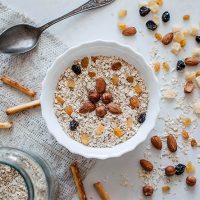
Alpen sounds like one of those cereals you can feel good about. Whole grains, dried fruit, a few nuts. It has that “healthy breakfast” vibe, especially if you’re trying to move away from the really sugary cereals.
But Alpen isn’t just one cereal. The Original version includes added sugar, while No Added Sugar gets its sweetness mainly from dried fruit. They look similar in the bowl, but they don’t land the same nutritionally.
So the real question isn’t only “is Alpen good for you?” It’s whether it’s a genuinely good everyday cereal, or just one that seems healthier than it actually is.
Quick Answer: Is Alpen actually healthy?
Alpen can be a reasonably healthy breakfast, especially the No Added Sugar version. The Original is less healthy because it includes added sugar, and both versions are still fairly sweet due to dried fruit, so portion size and toppings matter a lot.
Ingredients: what’s actually in Alpen?
Just a quick heads-up: recipes change sometimes, so the ingredients on the box matter more than anything you see online.
Here’s Original vs No Added Sugar side by side (as listed online at the time of writing – Jan 2026).
| Alpen Original | Alpen No Added Sugar | |
| Ingredients | Wholegrain Wheat (39%), Wholegrain Rolled Oats (35%), Raisins (16%), Sugar, Skimmed Milk Powder, Milk Whey Powder, Roasted Sliced Nuts (2.0%) (Almonds, Hazelnuts), Salt | Wholegrain Wheat (42%), Wholegrain Rolled Oats (33%), Raisins (19.5%), Skimmed Milk Powder, Milk Whey Powder, Roasted Sliced Nuts (2.0%) (Almonds, Hazelnuts), Salt |
What stands out straight away
- They’re basically the same cereal, but Original has added sugar.
- Both are raisin-heavy, and in the No Added Sugar one, raisins make up almost a fifth of the cereal.
- Both contain milk powders, so they’re vegetarian but not dairy-free.
My honest take on the “30% more fruit” thing
This is the part that annoys me a bit. Both boxes currently brag about “30% more fruit”, but if you look at the ingredients, the “fruit” here is basically raisins.
And yes, raisins are fruit, but they’re also dried fruit. That means they’re naturally high in sugar and they make the bowl taste much sweeter. I’ve eaten Alpen before and I already thought it had plenty of raisins, so seeing “30% more fruit” just makes me think, “even more raisins?” Not for me.
If you genuinely want more fruit in your breakfast, it makes more sense to keep the cereal less sweet and add a handful of fresh berries or sliced apple. You still get the fruity vibe without turning the whole bowl into “raisin cereal”.
The good bits
- Whole grains come first (wheat + oats), which is what you want to see in a muesli.
- The ingredient list is fairly short and recognisable compared to lots of cereals.
What to watch
- Sweetness and sugar, especially with Original because it has added sugar on top of the raisins.
- It’s not particularly nut-heavy, so don’t expect loads of protein or “staying power” from the nuts alone.
Now let’s look at the nutrition, because that’s where the difference becomes clearer.
Nutrition snapshot
These numbers are per 45g serving (so, the “recommended” bowl, not the one most of us accidentally pour on a sleepy morning).
| Per 45g serving | No Added Sugar | Original |
| Calories | 166 kcal | 168 kcal |
| Sugar | 8.1g | 9.5g |
| Fibre | 3.6g | 3.4g |
| Protein | 5.0g | 5.0g |
| Fat | 2.5g (0.4g saturates) | 2.5g (0.4g saturates) |
| Salt | 0.12g | 0.11g |
My takeaway: honestly, it’s a bit surprising how similar the two versions are nutritionally. But it makes sense when you look closer. The No Added Sugar version has more raisins than the Original, which keeps it naturally sweet without adding sugar.
And because raisins still bring sugar and calories, that’s probably why the calories end up almost the same as the Original, even without the added sugar.
How much sugar is in Alpen, really?
In a standard 45g serving, No Added Sugar has 8.1g sugars (about 2 teaspoons) and the Original has 9.5g sugars (about 2½ teaspoons).
That puts Alpen in the “medium sugar” zone rather than “low sugar”. The NHS classifies cereals as high in sugar if they’re over 22.5g per 100g, and Alpen sits below that (18g per 100g for No Added Sugar, 21g per 100g for Original).
And this is the bit people forget. 45g is a measured serving. If you pour more (very easy with muesli), sugar climbs quickly:
| Approx sugar per bowl | No Added Sugar | Original |
| 45g (label serving) | ~2 tsp | ~2.5 tsp |
| 60g (more realistic bowl) | ~2.75 tsp | ~3.25 tsp |
| 75g (big bowl) | ~3.5 tsp | ~4 tsp |
(That’s using the common label shortcut: 4g sugar ≈ 1 teaspoon.)
To put those numbers in context, the NHS recommends that anyone aged 11+ should have no more than 30g of “free sugars” a day.
Free sugars include sugars added to foods and drinks (the NHS even uses breakfast cereals as an example), and it also flags dried fruit as something to be mindful of when it comes to sugar and teeth.
Calories with milk (the way most people actually eat it)
If you have Alpen with 150ml semi-skimmed milk (a pretty normal bowl), you’re looking at roughly 241–243 calories, depending on the variety.
Total calories per bowl (45g Alpen + 150ml milk)
| Skimmed milk | Semi-skimmed milk | Whole milk | |
| No Added Sugar Alpen | ~222 kcal | ~241 kcal | ~265 kcal |
| Original Alpen | ~224 kcal | ~243 kcal | ~267 kcal |
(Milk calories used here are from Sainsbury’s nutrition panels: skimmed 74 kcal per 200ml, semi-skimmed 50 kcal per 100ml, whole 66 kcal per 100ml.)
Fibre and protein: will this keep me full?
Original and No Added Sugar are similar here too. You get about 3.5–3.6g fibre and 5g protein per 45g serving.
That’s decent fibre, but protein is only moderate, which is why Alpen can feel a bit “light” unless you pair it with something more filling.
Easiest upgrades: keep the portion sensible, have it with Greek yoghurt (or higher-protein milk), and if you want extra staying power, add a small handful of nuts or seeds.
So, is Alpen healthy then or not?
Alpen No Added Sugar is a fairly healthy choice, especially compared to many sugary cereals. The ingredients are quite simple, the list isn’t overly long, and it’s mainly based on whole grains with some nuts and dried fruit.
The main downside is that it’s still quite sweet because of the raisins, so it’s not a low-sugar cereal. Alpen Original is slightly less healthy because it also contains added sugar.
When Alpen might not be the best choice
Alpen works well for a lot of people, but there are a few situations where it’s worth being a bit more careful, or choosing something simpler.
- If you’re managing diabetes or blood sugar issues: it’s still a sweet cereal (even the No Added Sugar one), because the raisins push the sugars up, and it can spike blood sugar. Original is the one to be most cautious with because it also contains added sugar.
- If you have IBS or a sensitive gut: the mix of wheat, dried fruit and fibre can cause bloating or discomfort for some people, especially if your gut reacts to raisins or higher-fibre cereals.
- If you’re following a low FODMAP diet: Alpen isn’t a great fit because it contains wheat and raisins, which can be common triggers on a strict low FODMAP approach.
- If you’re gluten-free or coeliac: Alpen contains wheat, so it’s not suitable.
- If you have a nut allergy: it contains nuts (almonds and hazelnuts), so this one’s a no.
FAQs
Is Alpen ultra-processed?
It depends how you define it. Alpen is definitely processed (it’s made in a factory and includes ingredients like milk powder and whey powder), but the ingredient list is also fairly short and recognisable compared to a lot of cereals. If you’re trying to cut down on ultra-processed foods, Alpen probably isn’t your “cleanest” option, but it’s also not in the same category as bright-coloured, heavily flavoured kids’ cereals.
Is Alpen good for weight loss?
It can be, but it’s not automatically a “weight loss cereal”. Alpen becomes weight-loss friendly when you keep the portion sensible and don’t turn it into a huge bowl with lots of extras. The easiest way to make it work is No Added Sugar, a measured portion, and something more filling alongside it (Greek yoghurt, or a handful of nuts/seeds).
Is Alpen OK for diabetics?
Alpen isn’t usually the easiest cereal for diabetes, because even the No Added Sugar version is still quite sweet and carb-heavy thanks to the raisins, so it can push blood sugar up, especially if you pour a bigger bowl than the label serving.
If you really want it, No Added Sugar is the better option, keep the portion on the smaller side, and have it with something that slows things down a bit (Greek yoghurt, higher-protein milk, or a small handful of nuts). And as always with diabetes, your own readings matter most, so it’s worth checking how your body responds and running it past your diabetes team if you’re unsure.
Is Alpen high in sugar?
It’s not one of the highest-sugar cereals, but it’s also not low-sugar. The sweetness mainly comes from raisins, and the Original adds extra sugar on top. The bigger issue is that it’s very easy to pour more than the suggested serving, and that’s when sugar adds up quickly.
Is Alpen good for constipation?
It can help, mainly because it provides a decent amount of fibre. If you’re not used to higher-fibre cereals, start with a smaller portion and drink plenty of water, otherwise it can sometimes do the opposite and make you feel a bit blocked or bloated.
Can Alpen upset your stomach?
Yes, it can for some people. The mix of wheat, dried fruit and fibre can cause bloating, gas, or discomfort, especially if your gut is sensitive or you’re not used to fibre-rich breakfasts. If that sounds like you, try a smaller portion first and see how you feel.
Is Alpen low FODMAP?
No, Alpen contains wheat and raisins, and both can be common triggers on a strict low FODMAP diet. Some people might tolerate a small amount, but it’s not a low-FODMAP-friendly cereal overall.
Is Alpen vegan?
No. Alpen contains skimmed milk powder and whey powder, so it’s vegetarian but not vegan.
More cereal label breakdowns
Shreddies
Special K Cereal
Kellogg’s All-Bran Cereal
Weetabix
Krave
Rice Krispies
Ready Brek
Bran Flakes

Petra Nakashian (previously Kravos) has been writing about health and healthy living for over 10 years. She covers nutrition, natural health, and everyday wellness topics, with a focus on clear, practical advice you can actually use. Petra enjoys digging into health books, studies, and reputable research to check health claims, because there’s a lot of advice online that sounds convincing but isn’t accurate.