Recently updated on January 27th, 2026 at 11:23 am
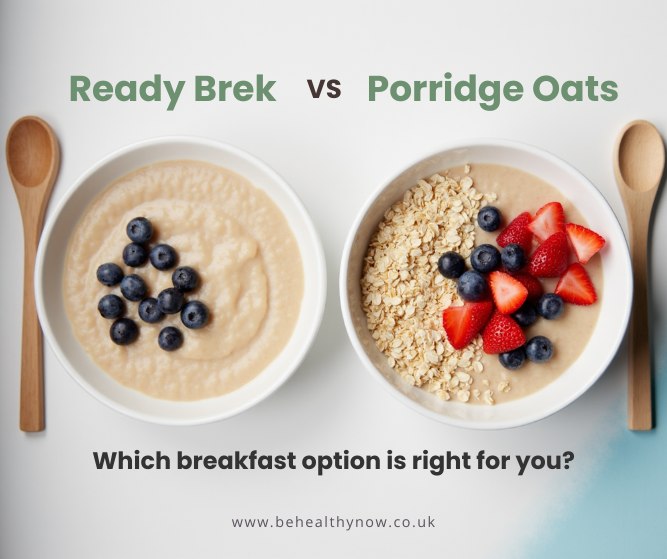
If you’re comparing Ready Brek and porridge oats, you probably want to know one thing. What’s the actual difference, and is one healthier than the other?
I’ve tried both, and I’ll be honest, Ready Brek is more my thing because it’s smoother. Some porridge oats can be a bit chewy, which I’m not a fan of. I also bought Ready Brek for my child when he was getting used to foods, because I wanted something warm but with a smoother texture.
So are they the same? Not exactly, but they’re very close. They’re both oats. The main differences are texture and how they’re processed, plus one big extra. Ready Brek is fortified with added vitamins and minerals, while plain porridge oats usually aren’t. That’s a genuine plus, especially for kids who don’t always eat a perfectly balanced diet.
Ready Brek vs Porridge Oats at a Glance
If you just want the quick version before we get into the details, this is it.
| Ready Brek | Porridge oats | |
| Ingredients | Wholegrain rolled oats + wholegrain oat flour, plus added vitamins/minerals (iron, calcium, vitamin D, B vitamins) | Oats (usually just rolled oats) |
| Processing | More finely milled (the oat flour makes it smoother) | Less processed, more “whole” texture |
| Texture | Smoother and softer. You can get it very smooth if you cook it well (or blend it), but it still isn’t quite the same as a totally silky purée | More textured and can be a bit chewy (especially jumbo oats) |
| Cooking time | Faster | Slower |
| Added vitamins & minerals | Yes (fortified) | Usually no (plain oats) |
| Best for | Smoother porridge, kids, quick mornings | Classic porridge lovers, thicker texture |
| Cost | Often a bit pricier | Usually cheaper |
What this means in real life: they’re both oats, so you’re not choosing between “healthy” and “unhealthy” here. You’re mainly choosing texture and convenience, plus whether you want the added vitamins and minerals that Ready Brek has.
Why they cook and feel so different
Even though both are oats, they behave differently in the bowl because the oat pieces aren’t the same size.
Ready Brek uses a mix of rolled oats and oat flour (finely milled oats). Because the oats are more finely milled, it absorbs water faster and breaks down more as it cooks, so you get a softer, smoother bowl. And because there aren’t many big oat flakes in it, it won’t turn into that chunky, chewy porridge texture, even if you cook it longer.
Related: Is Ready Brek Healthy?

Porridge oats are usually just rolled oats, so they keep their shape more. That’s why porridge can feel thicker, more textured, and sometimes a bit chewy, especially if you buy jumbo oats or you like your porridge on the thicker side.
Related: The Ultimate Guide to Old Fashioned Oats Vs. Quick Oats
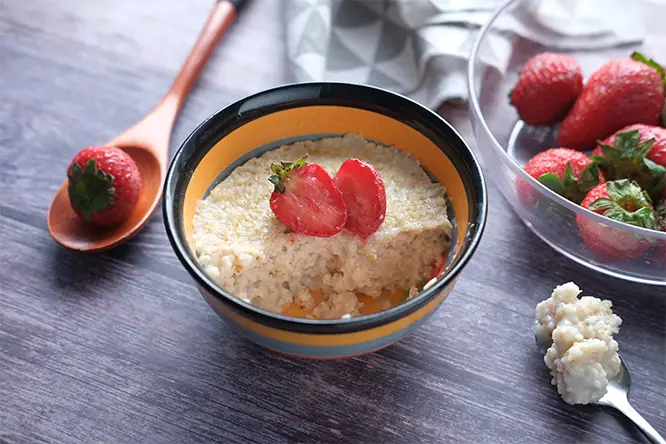
One thing worth saying here: Ready Brek being more processed doesn’t automatically make it unhealthy. In this case, it mostly changes texture, cooking time, and how easy it is to eat, which is exactly why a lot of parents (including me) end up buying it for kids.
Ready Brek vs Porridge Oats: Nutrition in a Real Bowl
Most cereal boxes list 30g as a “serving”, but a normal bowl for many adults is closer to 50–60g once you actually pour it out. Tesco’s Grower’s Harvest Porridge Oats even lists 50g as one serving, which feels a lot more realistic.
So here’s a fair comparison using 50g dry for both:
| Ready Brek Original | Grower’s Harvest Porridge Oats | |
| Calories | ~187 kcal | 188 kcal |
| Carbs | ~29.0g | 30.2g |
| Sugars | ~0.5g | 0.8g |
| Fibre | ~4.0g | 4.3g |
| Protein | ~6.0g | 5.5g |
| Fat | ~4.4g | 4.1g |
| Salt | ~0.02g | <0.01g |
| Added vitamins & minerals | Yes | No |
Ready Brek values above are calculated from its per-100g label, scaled down to 50g so the comparison is like-for-like.
What this means: the base nutrition is very similar. Calories are basically identical, and both are low in sugar (it’s naturally occurring, not added). Fibre is also close, but porridge oats are slightly higher, which can help with fullness. The main standout difference is that Ready Brek is fortified with added vitamins and minerals.
The added vitamins and minerals in Ready Brek
This is the bit that can genuinely sway people, especially if you like the idea of getting some iron and vitamin D “built in”.
A quick label note: RI means Reference Intake. It’s the daily guideline used on UK labels for an average adult. The %RI figures below are approximate, because we’re scaling the label’s “per 100g” numbers down to a 50g bowl.
| Nutrient (Ready Brek) | Approx in 50g dry | Approx %RI |
| Iron | 6mg | ~43% |
| Vitamin D | 2.15µg | ~43% |
| Calcium | 670mg | ~84% |
| Thiamin (B1) | 0.47mg | ~43% |
| Riboflavin (B2) | 0.60mg | ~43% |
| Niacin (B3) | 7mg | ~44% |
| Vitamin B6 | 0.60mg | ~43% |
| Folic acid | 85µg | ~43% |
| Vitamin B12 | 1.05µg | ~42% |
So if you like the smoother texture and you want the fortification, Ready Brek has a clear “extra” built in. If you don’t care about that part, plain porridge oats hold up really well nutritionally.
So which one should you pick?
If you like a smoother bowl, Ready Brek is usually the easier option (that’s why I bought it, especially for my child). If you prefer a thicker, more textured porridge, stick with porridge oats.
Nutrition-wise, they’re both good. Porridge oats tend to be a touch higher in fibre, while Ready Brek has the added vitamins and minerals.
Whichever you choose, it’s worth saying this: plain oats on their own don’t keep most people full for long. If you want a breakfast that lasts, add protein and healthy fats, like Greek yoghurt or quark, plus nuts or seeds, and some fruit if you want it sweeter.
FAQs
Which is better for weight loss, Ready Brek or porridge?
Porridge oats have a slight advantage because they usually contain a bit more fibre and keep more texture, which can make the bowl feel more filling.
Ready Brek is smoother and more finely milled, so some people find it digests a little quicker and they’re hungry again sooner. It can still work well for weight loss, it just needs a bit of help.
Whichever one you choose, the best weight-loss bowl is the one that keeps you full. That usually means adding protein (Greek yoghurt, quark, skyr, higher-protein milk) plus nuts or seeds, then using fruit (berries, grated apple, banana) to sweeten it naturally. If you can, go easy on honey, syrup and sugar because they add calories fast without doing much for fullness.
Ready Brek vs Quaker oats: what’s the difference?
Quaker is just a brand of oats. Most Quaker porridge oats are plain rolled oats.
Ready Brek is also oats, but it’s more finely milled (so it cooks smoother and faster) and it’s fortified with added vitamins and minerals.
Can I use Ready Brek instead of oats?
Most of the time, yes. It behaves like finer oats, so it cooks quicker and gives a smoother result. It can work well for quick porridge, thickening smoothies, or baking if you’re happy with a softer texture.
Which is better for a baby, Ready Brek or porridge oats?
It depends on age and stage. If you’re making either for a baby, keep it simple (no honey), make sure it’s well-cooked and cooled, and check the “may contain” allergen warning on the pack.
Ready Brek is smoother, which some babies handle better once they’re on solids. But for babies and toddlers, it’s best to follow weaning guidance (solids from around 6 months) and keep textures age-appropriate.
You may also like:
Is Alpen Muesli Good for You?
Is Special K Healthy?
Is Weetabix Healthy?
Are Bran Flakes Good For You?
Kellogg’s All-Bran Cereal

Petra Nakashian (previously Kravos) has been writing about health and healthy living for over 10 years. She covers nutrition, natural health, and everyday wellness topics, with a focus on clear, practical advice you can actually use. Petra enjoys digging into health books, studies, and reputable research to check health claims, because there’s a lot of advice online that sounds convincing but isn’t accurate.